— the ordinary (re)assembly of me in the aftermath of the unimaginable
After my mother died, I felt off-kilter. Torqued. Listed to one side or the other.
It was as if I’d lost my center of gravity.
– Christina Sharpe, Ordinary Notes
Note 156
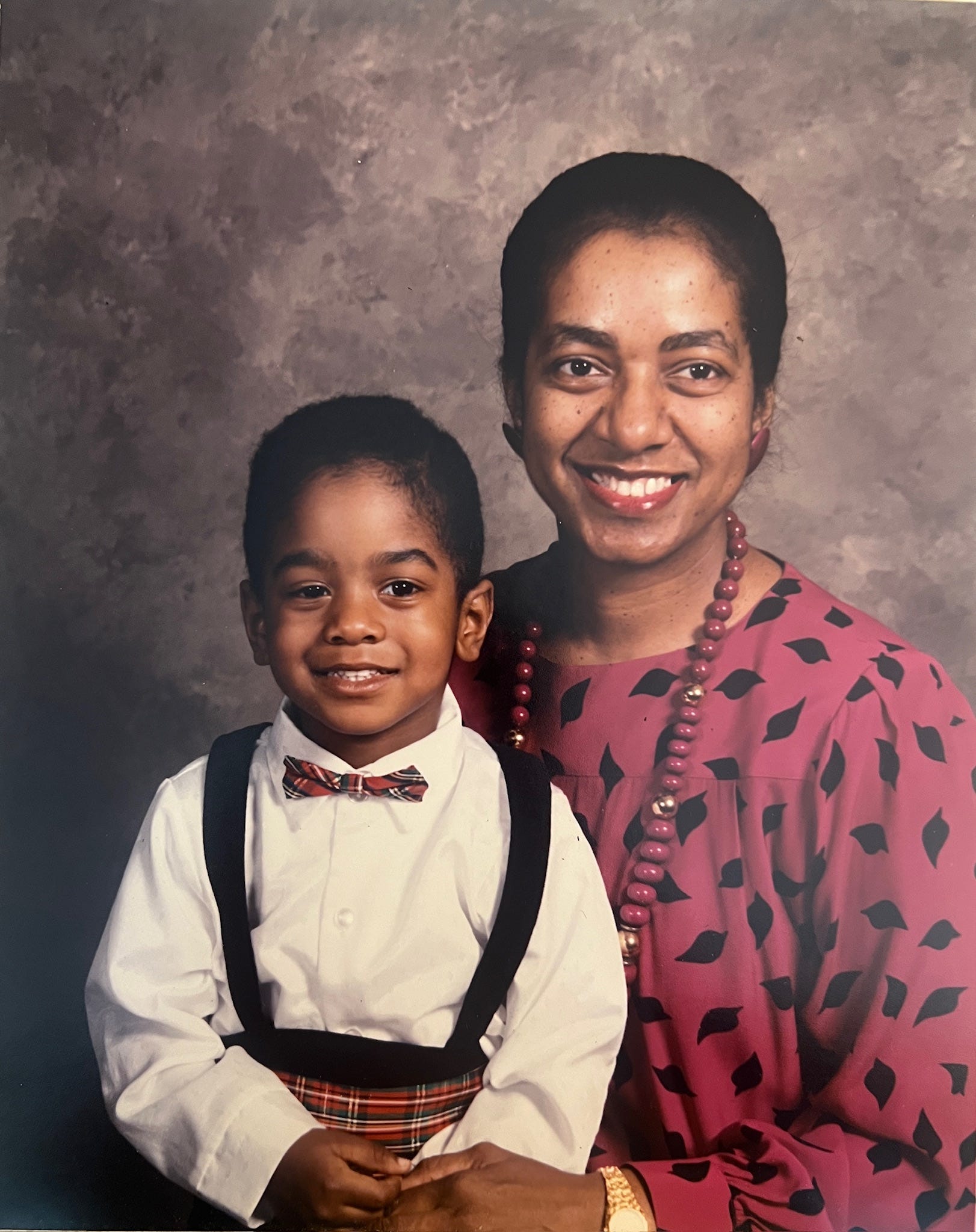
A year ago today, I too, lost my center of gravity.
The roughly 365 days since have been a series of exercises (many failed, some successful) in equilibrium (re)assembly. This (re)assembly, I would come to learn, is not about returning to who I was before my mother died. Not only is that impossible, but that me could not have lived in a world without her in it. One lesson of my journey with grief has been that you will never be that person again. I will shed some things. I will harvest others. I will be confused as ever about some things. I will be as certain as ever about other things. I will excavate some things I’d buried long ago. I will lay to rest other things I’d never gone without. I will lose some people. I will gain other people. I will confound some people who have known me for years. I will enrich other people I don’t even know yet. I will hurt some people with my actions. I will be hurt by the actions of others. I will fuck up. I will flourish. I will change.
I am on the cusp of having my mother’s headstone engraved.
I am on the cusp of selling a my mother’s home. A house I just knew I’d have a key to, and a room in, up until the day I die.
I am on the cusp of donating, thrifting, or storing all of her material possessions, as well as those of my grandmother and aunt.
In short, I am on the cusp of a transformation.
In the words of James Baldwin, “Life is tragic simply because the earth turns and the sun inexorably rises and sets, and one day, for each of us, the sun will go down for the last, last time.” Here, Baldwin brings our attention to how the relentlessness of the ordinary is a fierce reminder that our lives are not life itself. Life is something we engage in and share with others.
I mean ordinary in the sense that Christina Sharpe has written about it
I think that the ordinary is also extraordinary. I mean that the quotidian can be both brutal, but it can also be deeply illuminating. And it can be that which connects you to people across space and time. There’s something like the ordinary extraordinariness of the ways that Black people live in the midst of so much that is pressing down on us to kind of extinguish that living. There’s really so much that is a kind of everyday, quotidian ordinary beauty-making in the world.
I have been floored by the love, care, assistance, and showing up over time of my community. Like, my circle is the shit (shoutout to y’all). The ordinary ways they have brought laughter, joy, pleasure, and fun into my life while simultaenously meeting my ventures into sadness and despair with presence instead of disdain or ambivalence has had an immeasurable impact on my quality of life.
I never fathomed not having a place in Baltimore to call home at any age, much less in my mid 30s (there’s a difference between having somewhere to go, and that somewhere being a “home”). Then again, I never fathomed being this age without anyone who raised me left (there’s a difference between having been around when someone was younger, and having raised them). I’m not young per se, but I didn’t expect to be here when I’m the same age as NBA All-Stars. Another thing I had not realized was how being an only child has shaped my experience of this loss.
Freelance writer for The Guardian, Lisa Wright, in an article entitled I was alone in my grief when my parents died – but missing them gave me the answer, highlights this particularity well when she says that “the lack of a direct line to those people – someone who knew them like I did – felt absolutely gutting… without a sibling to compare myself to, I had no barometer to measure what I was really feeling… here was no one else left on earth that would remember the incredibly normal evenings we shared – and that was horribly, horribly unbearable.” Put another way, it’s the realization that nobody else lost what you did, and you can’t expect them to react as if they did. They may have been thrown for a loop, but they did not lose their center of gravity. You did. For them, this is a realignment. For you, it is a (re)assembly. You are in the process of creating new practices, new habits, new routines, and new rituals.
Anyone who knows me, knows I’m into the ritual of things (of life, of commemoration, of memory, of nature, of sports, of music, of film, of art, of the universe, of language, of intimacy, of people, of place, etc.). Perhaps the way my Inattentive ADHD does well with routine is one reason. That said, perhaps another reason ritual appeals to me is that it presents an occasion to make routine some sense of regard.
‘[We, Black people,] are constituted through and by continued vulnerability to overwhelming force though not only known to ourselves and to each other by that force.’
That other knowing, that other note, is one that we might call regard.
– Christina Sharpe, Ordinary Notes
Note 107
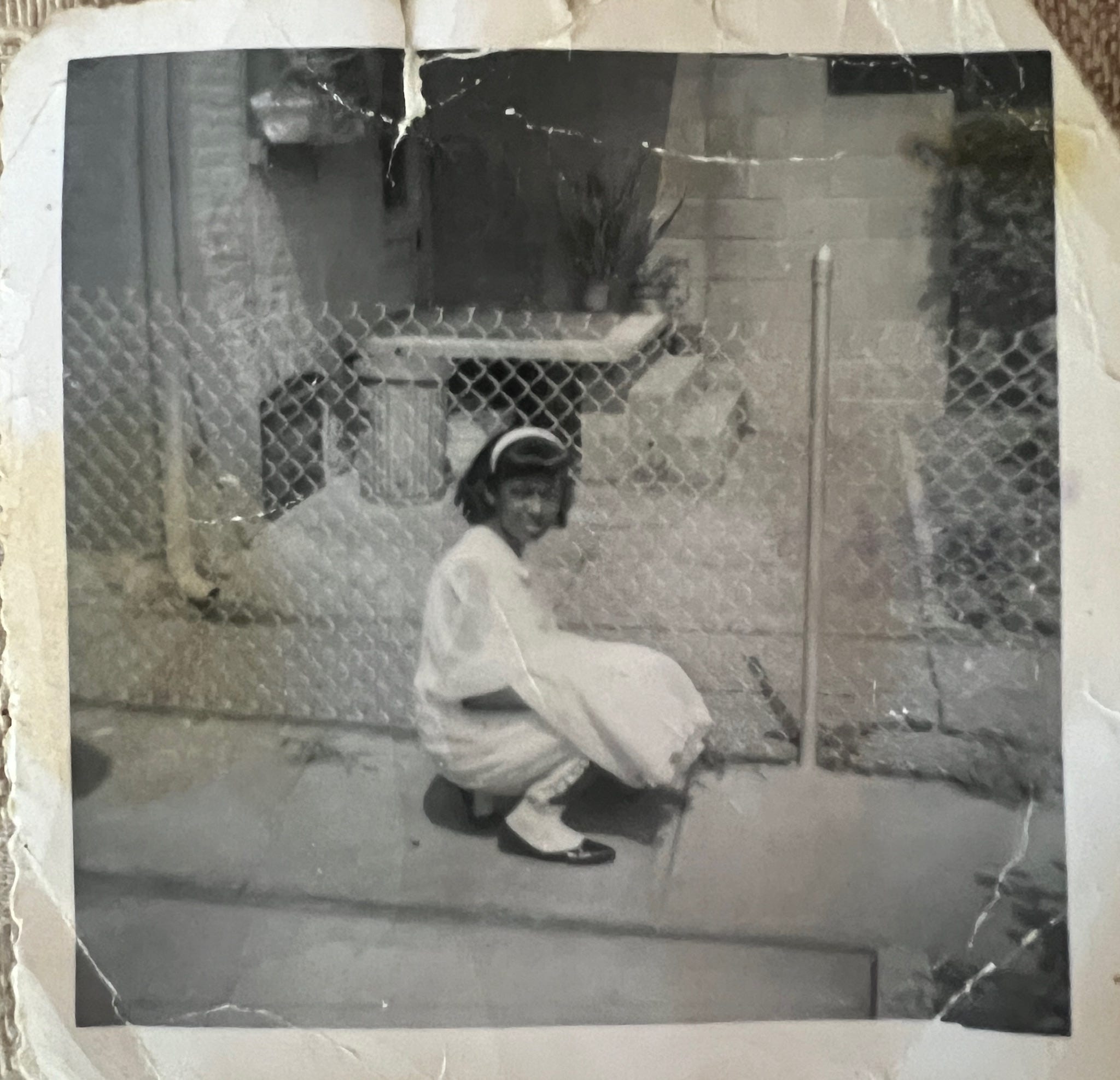
One process I am currently undertaking that feels like an overwhelming force filled with incessant rituals (many that I despise) is the administration my mother’s estate and affairs (more on that another time). But in terms of managing the legal, emotional, financial, combination that is the aftermath of death under capitalism as an only child, Wright captures the reality well. “You have to, on some level, hold it together because there is no space for you to fall apart.” What I will say for now, is that in each drawer, dresser, cabinet, envelope, photo album, address book, article of clothing, and piece of jewelry is so much that I did not know, the makings of a full and luminous life that was vibrant before I was even a thought.
The work of estate administration certainly has legal, financial, and business components. That is, in fact, most of it. However, while those are facets of the work, they are not what the work is about. At least not for me. For me, it is an attempt to bring what I can of her life to resolution, to respect her privacy, to tend to her belongings, and to release when necessary, what was hers while she was here with regard. Especially in a world where having little regard for working-class black women is ordinary.
Maybe I ought to return my mother to her own opacity; allow some description to fall away. Maybe there is just too much that I do not know. I can only use my own powers of observation. I can only use my own belated, partial understanding. I can only extend my deep regard.
– Christina Sharpe, Ordinary Notes
Note 150
I do know that what I learn in this exchange is just some small part of my mother’s life. Those other parts of her life about which I know next to nothing: I have tried to enter with grace and imagine with tenderness or I have left them alone. I owe my mother that. Regard.
– Christina Sharpe, Ordinary Notes
Note 163 (excerpt)
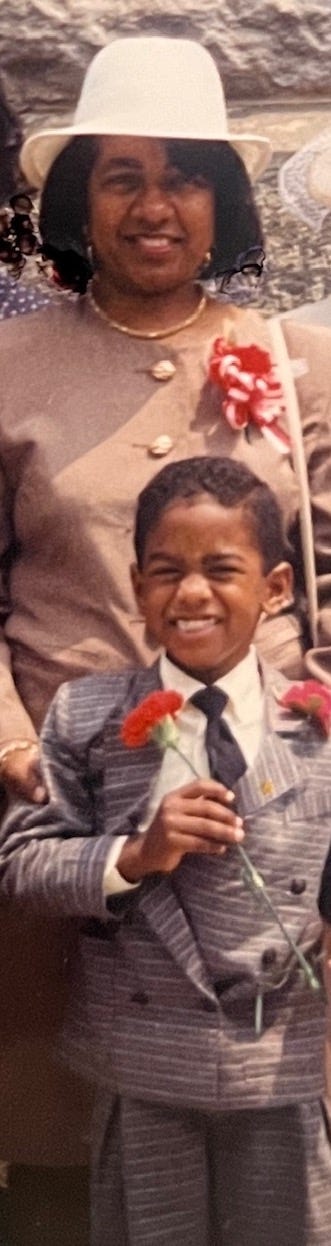
Lisa Wright discusses the feeling of dealing with all of this as an only child as “an acute sense of displacement.” This, of course, heralds Sharpe’s loss of one’s “center of gravity”. I have come to learn that whether we call it finding ones place, (re)assembling a new equilibrium, or some other term for doing something as mundane as living, it is something that only you know how to do for yourself. You cannot do it without partners, friends, family, community, or other people (all of which I have in one form or another, love y’all down). However, those are people that support you in being you. Only you know what it means to be you. Only you know how to be you. This is perhaps never more true than when we are in the throes of seismic grief. I think about this often when I widen my scope beyond myself, and look out at the world.
From Gaza to Khartoum, from Goma to Odesa, from Los Angeles to Providence, from Tecoluca to Baltimore there are countless people who are beset daily with genocide, famine, war, kidnapping, incarceration, and more. There are countless people for whom seismic grief and sudden death are not rare tragedies, but hourly occurrences. To be as familiar with death as I am, and then to think of the children in these places for whom, by multiple orders of magnitude, death is more ordinary that it has ever been for me, is heartbreaking. To be in the process of selling my family home, and then to think of places where the destruction and loss of such homes is ordinary; either through the slow violence of colonialism or the immediate violence of genocide is heartbreaking. To be as familiar with the violence of policing as I am, and then to think of those snatched up by ICE as they go about the ordinary tasks of walking down the street, attending school, going to work, graduating, watching a sporting event, or doing nothing at all is heartbreaking. To know what I know and live what I live vis a vis state sanctioned violence via legal and political systems, and then to think of all the LGBTQIA+ people confronted with the reality of living in a place where most people wish you dead or non-existent (in that order), and if you exist at all, they want you silent or in seclusion, but never as you truly are… that is heartbreaking.
It breaks my heart because I know on an individual level what it means to lose one’s center of gravity a handful of times. I cannot pretend to begin to grasp what it is to lose one’s center of gravity on a daily basis in a war zone. To see your parents, children, best friends, lovers, crushes, exes, family, neighborhood bullies, and annoying classmates killed in the blink of an eye? What even is gravity at that point? Though I do not know what living through that particular experience entails, I do know what it is to live through the unimaginable, to be subjected to state-violence, to incur the wrath of violent governments and racist regimes. My understanding of what the shattering of life feels like has only strengthened my commitment to speak out on behalf of and advocate for those who have their lives shattered not by the unfortunate ordinary events that existing comes with, but by the horrendous ordinary events that empire comes with.
Visuality is not simply looking. It is a regime of seeing and being, and any so-called neutral position is a position of power that refuses to recognize itself as such.
– Christina Sharpe, Ordinary Notes
Note 156 (excerpt)
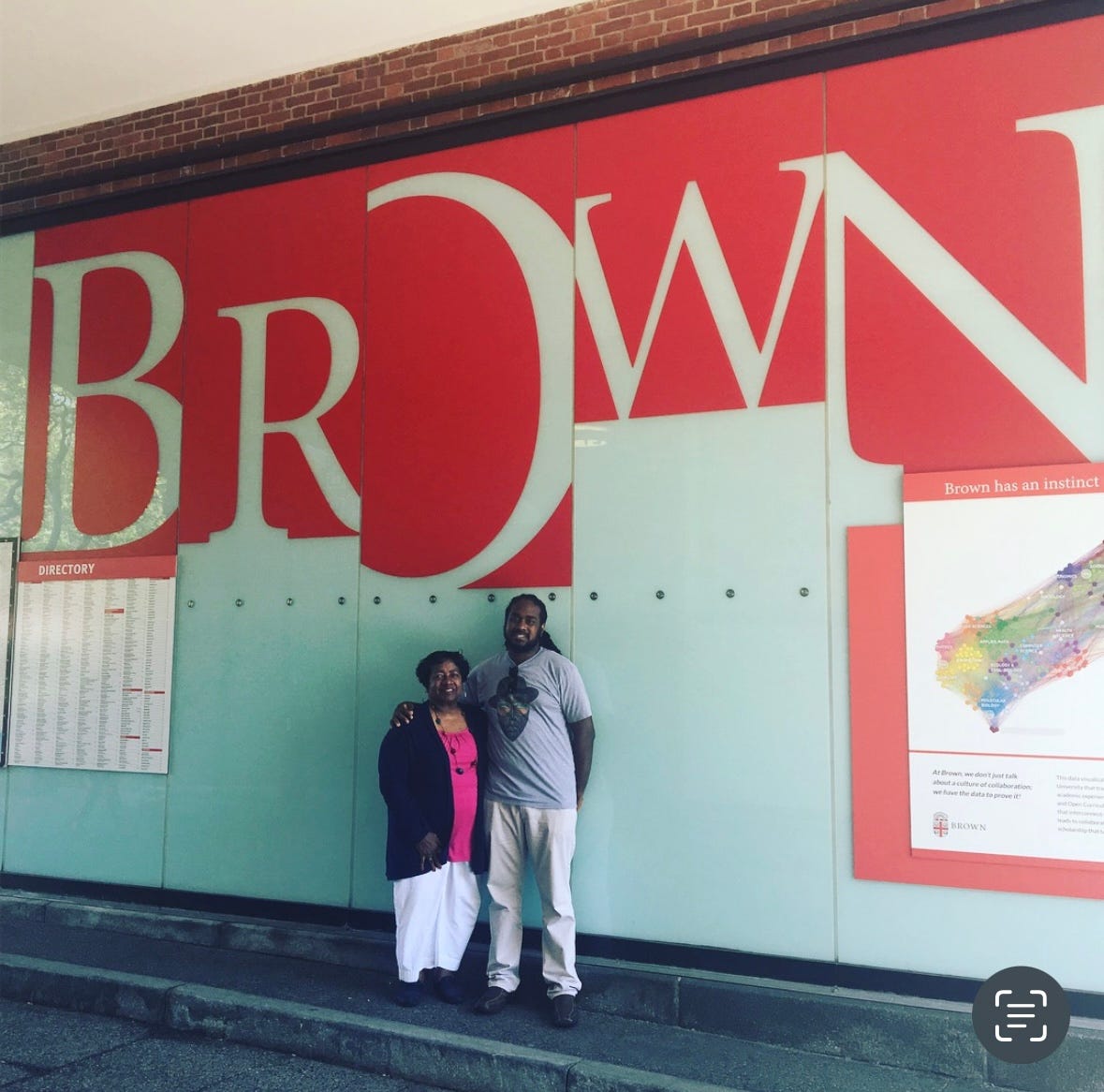
Living a life that meaningfully resists that violence isn’t something that’s optional for me. It is something that’s essential for me. I can’t simply look as if I’m neutral. I know others can, but that hasn’t been me before, and I’m clearer than ever that it won’t be me going forward.
I read, write, think, and perform as part of my job. But my job isn’t why I read, write, think, and perform. When I was 17, I came up with a pretty corny, yet prescient nonetheless, acronym to describe myself. The aforementioned acronym was P.S.A., which stood for poet, scholar, and activist. These were not professions or roles to me, but vocations (in the Vincent Harding sense). During my journey with grief, I have come to realize that, for years now, I have not poured into these equitably. With my poetry, and by connection writing and performing, being the least nourished of those vocations. It is clear to me now that poetics is not an ancillary endeavor for me. In order to be me, the me that is living on the other side of the past 365 days, I have to reignite the spark that burned inside 17 year old me. I have to get back to that audacious artist and performer who got free on stage, found courage in an inkwell, and stirred souls with a microphone. I won’t be able to live if I’m not writing and using language to make art of some kind, I know that now.
I am still feeling acute displacement. But, one year after I lost my center of gravity, I am a little bolder, braver, queerer, stronger, more intentional, more experimental, a lot less interested in being normal (i was never normal, but that’s not the point), and a lot more interested in unraveling the ordinary. Thank you to those in my circle who, in different ways, have embarked upon multiple (re)assembly journeys of your own and have shared with me your wisdom and brilliance, you are so clutch and I’m so grateful. Thank you to Lisa Wright and James Baldwin, whose words helped inspire how I went about writing this piece. A special thank you to Christina Sharpe, whose vulnerability helped inspire the shape of the piece of writing.
This whole thing (all of it) is hella scary. Not to mention that it’s super sad, financially terrifying, and the coming months are going to be some of the hardest of my life. But it is not only that.
I am (re)assembling a new equilibrium. I couldn’t be prouder of me up until last year, that dude was so cool. But that me isn’t here anymore. I don’t know much about this new dude, he’s still figuring out the gravitational pull in this new world. But I know they’re gonna try their best to be kind, to be loving, to be generous, to be playful, to have fun, to take risks, to be vehemently committed to their principles. And I know they’re gonna write, make, teach, and do some really special stuff before it’s all said and done. And while I don’t yet know who this new person is, I like them.
Sometimes in losing who we were, we find our way to who we are becoming.
— chris
p.s. love you mom, hope the orioles win tonight, i’ll be at the game, catch me on masn.
 The Unravelings
Leave a comment